

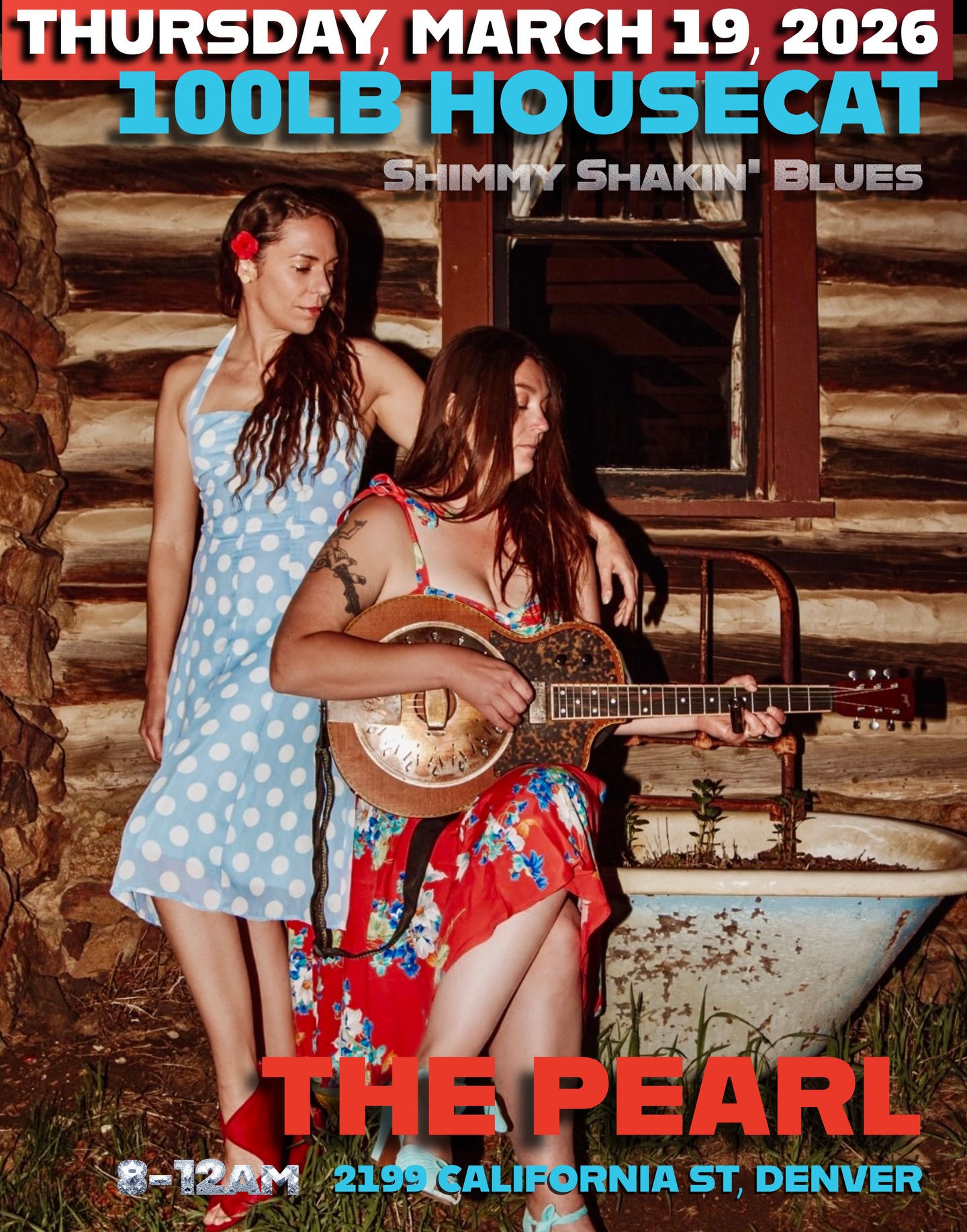
Felicia and I discovered Hundred Pound Housecat in November of 2024. They won the Solo Duo act at the Colorado Blues Society Road to Memphis Challenge. Minds were blown and we vowed that they would play Shimmy Shakin’ Blues and there would be a Piedmont Blues lesson. In September 2025, the stars aligned, the gig happened and I taught that Piedmont lesson.
On March 19th, Hundred Pound Housecat will be back on the stage at SSB, and I am gearing up to teach class again.
So what is Piedmont?
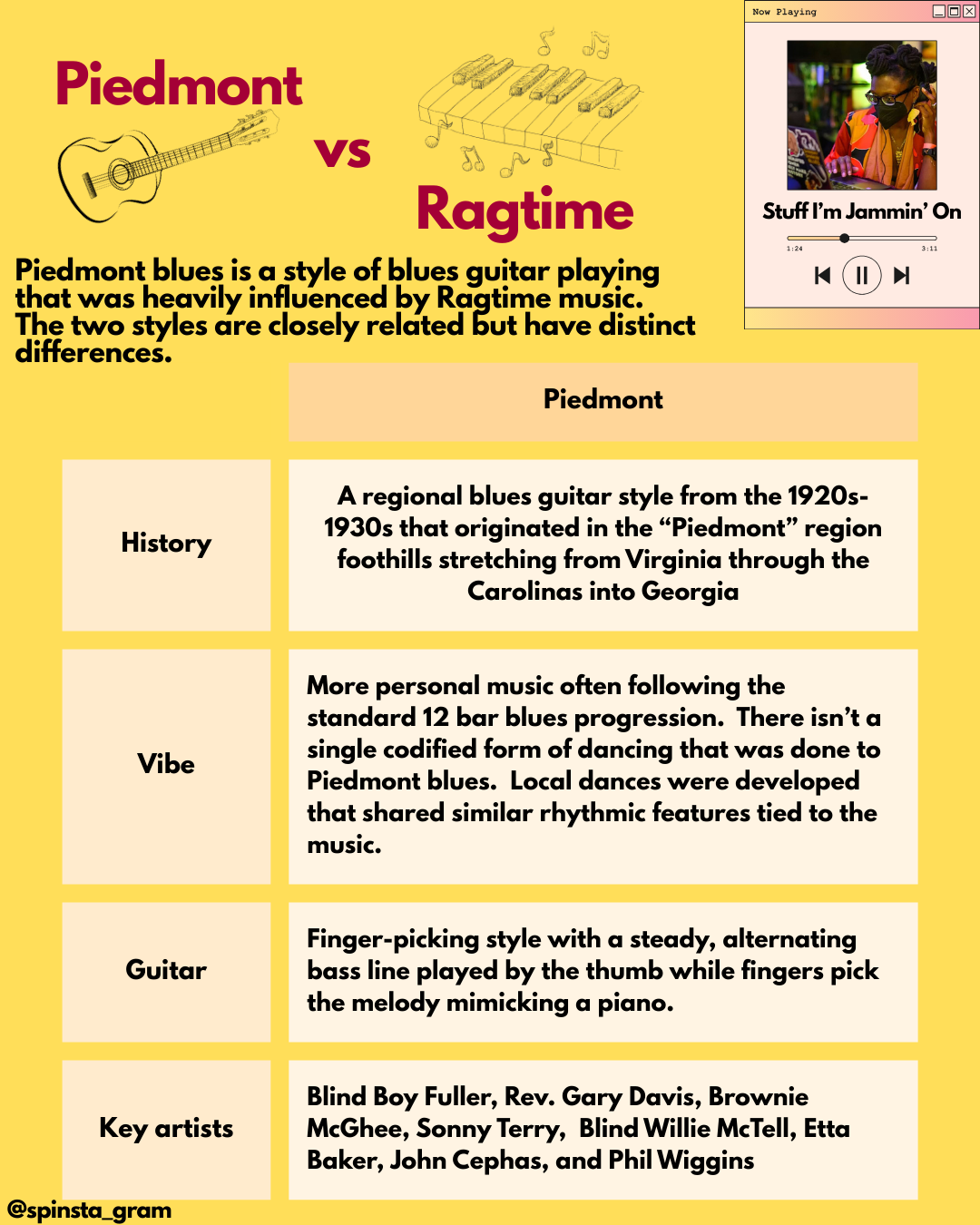
Piedmont blues comes from the “Piedmont” region foothills stretching from Virginia through the Carolinas into Georgia. Dancers in those communities developed social dances to accompany this style of guitar-driven, ragtime-influenced, syncopated music in the 1920s. Piedmont blues dancing isn’t a single codified form, but rather a collection of local dances that shared similar rhythmic features tied to Piedmont blues music. Like many blues dances, it grew out of the local community (descendants of Africans and indentured Irish servants (most voluntary, some not) that worked on West Indies tobacco and sugar plantations) and flourished at house parties, jook joints, backyards and front porches, often with very few musicians rather than full bands and in very small spaces.
Piedmont blues dancing can be done in solo or with a partner, but even the partnered versions give a very light nod to the partnership and leave a lot of room for solo interpretation and independent movement. Partnered Piedmont blues dancing often includes a relaxed open embrace, sometimes side-by-side, where both dancers can show off rhythmic variation and practice call and response. It often incorporates steps drawn from cakewalk, early jazz, or buck dancing. It emphasizes a lot of footwork-driven movement, with shuffles, slides, taps, and syncopated triple steps to echo the “fingerpicking” quality of the guitar music.
Resources
I had the pleasure of teaching a Piedmont intensive in the Bay Area in December. The team (Grey Armstrong, Heidi Fite, Gwen Bone, Jen Delk) put together a resource guide. Check it out here
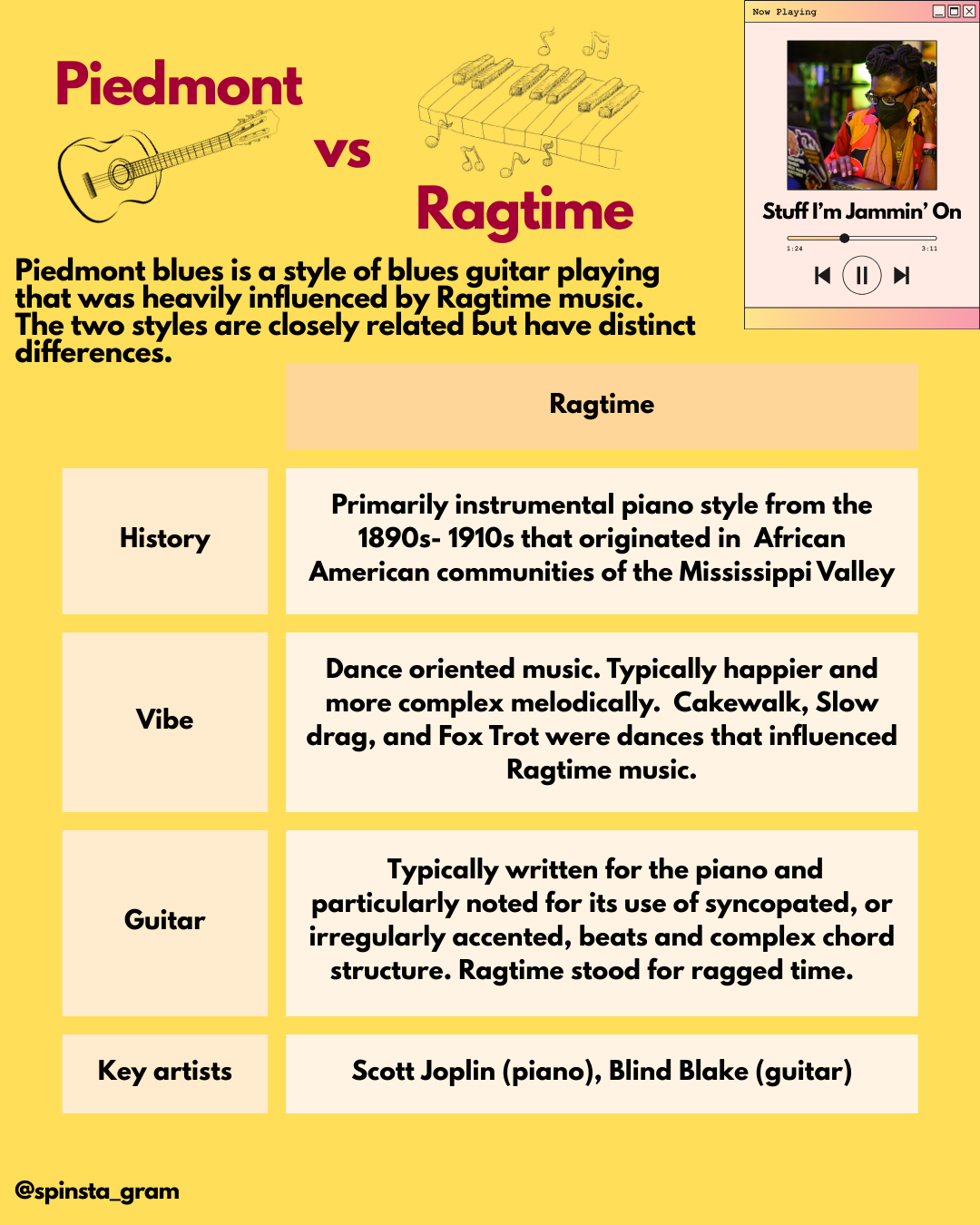
When I was pulling together music for the weekend I put together a few infographics to provide a little context related to the music