

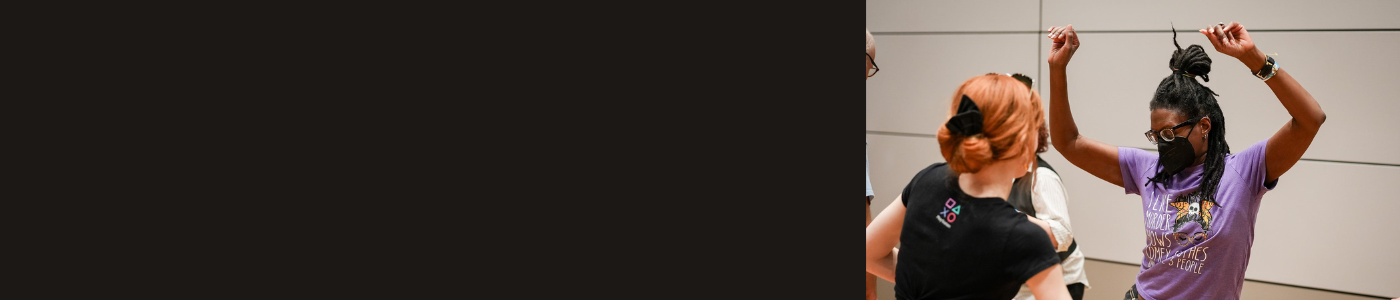
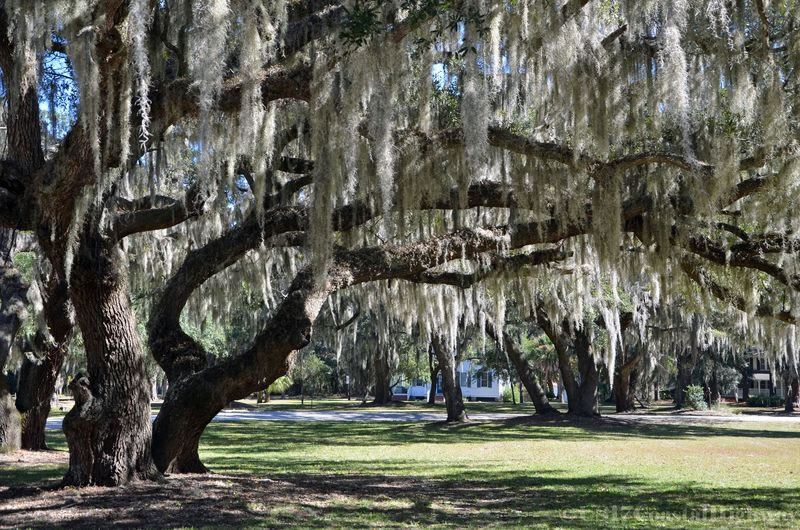
Last night I had the opportunity to teach blues in an interactive art exhibit. Transcendent Femme, the latest installation from Colorado Springs visual artist Kai Gaynor, follows the story of a creative named “Transcendent Femme” on her quest towards self discovery through the enchanted forest of “Transcendence”, a spirit of change and evolution that has called upon the main character.
This exhibit is deeply rooted in both the Black American and women experience and takes place in a forest. This is where I decided to make bold choices in what I ended up teaching as a drop in beginner class. I started with a Ring Shout. I have been taking blues classes since 2004 and we have gathered in a circle in a more modern form of the shout, the jam circle, but I have never done anything like this before.
The one place that black people could gather in slave times was church, outside of a church they could gather to worship Christianity. Dance was forbidden, but if your legs didn’t cross, it wasn’t considered dancing. Using these guidelines, Black folk found a way to express themselves as they did in Central and West Africa. Dancers moved in a counterclockwise circle and directed their dancing and singing to the ancestors and gods.
These basic elements of ring shout—dance, calls, cries, and hollers; blue notes; call-and-response; and strong rhythmic aspects. Participants moved in a circle, providing rhythm by clapping their hands and patting their feet. One individual would set the tempo by singing, and his lines would be answered in call-and-response fashion. In some cases, another individual rhythmically beat the (usually wooden) floor with a broomstick or other piece of wood.
I was a little scared to lead the shout with my own voice so I relied on a track from the McIntosh County Shouters, a Gullah-Geechee group that has performed professionally since the 80s. [You can get lost for days studying the Gullah who were able to preserve much of their African language and cultural heritage due to isolation]
I encouraged the class to move about freely. Clapping, stomping, singing, whatever they wanted similar to the Gullah-Geechee Ring Shout I found online.
From the Shout we moved on to discuss the one other space made for gathering outside of church, Juke Joints. Tucked deep into the woods Black folk danced, sang, and played music. Blues was a dance for family and friends in addition to romantic partners. We started with the Slow drag which dates back to the late 1800s. Rest was a form of resistance, Field workers were punished for taking their time. With Slow drag they could take all the time in the world.
In honor of the event theme, Transcendent Femme, I highlighted the following female blues artists during class and shared their tales of transcending the lives they were born into to become blues signers in their early teens.
- Memphis Minnie – If you see my Rooster (1928). Minnie was a runaway who made her start busking with the circus.
- Victoria Spivey – Black Snake Blues (1926) – Victoria played pianos in bars and nightclubs.
- Bessie Smith – Nobody knows you when you’re down and out (1929) – Bessie started out busking and managed to leave town as a dancer in the same troupe as Ma Rainey.
- Alberta Hunter – Chirpin’ the blues (1939) – Alberta ran away to Chicago with hopes of becoming a singer
- Ma Rainey – Black Eyed Blues ( 1929) – Ma Rainey started singing in a church group and toured with the minstrel shows.